


Description
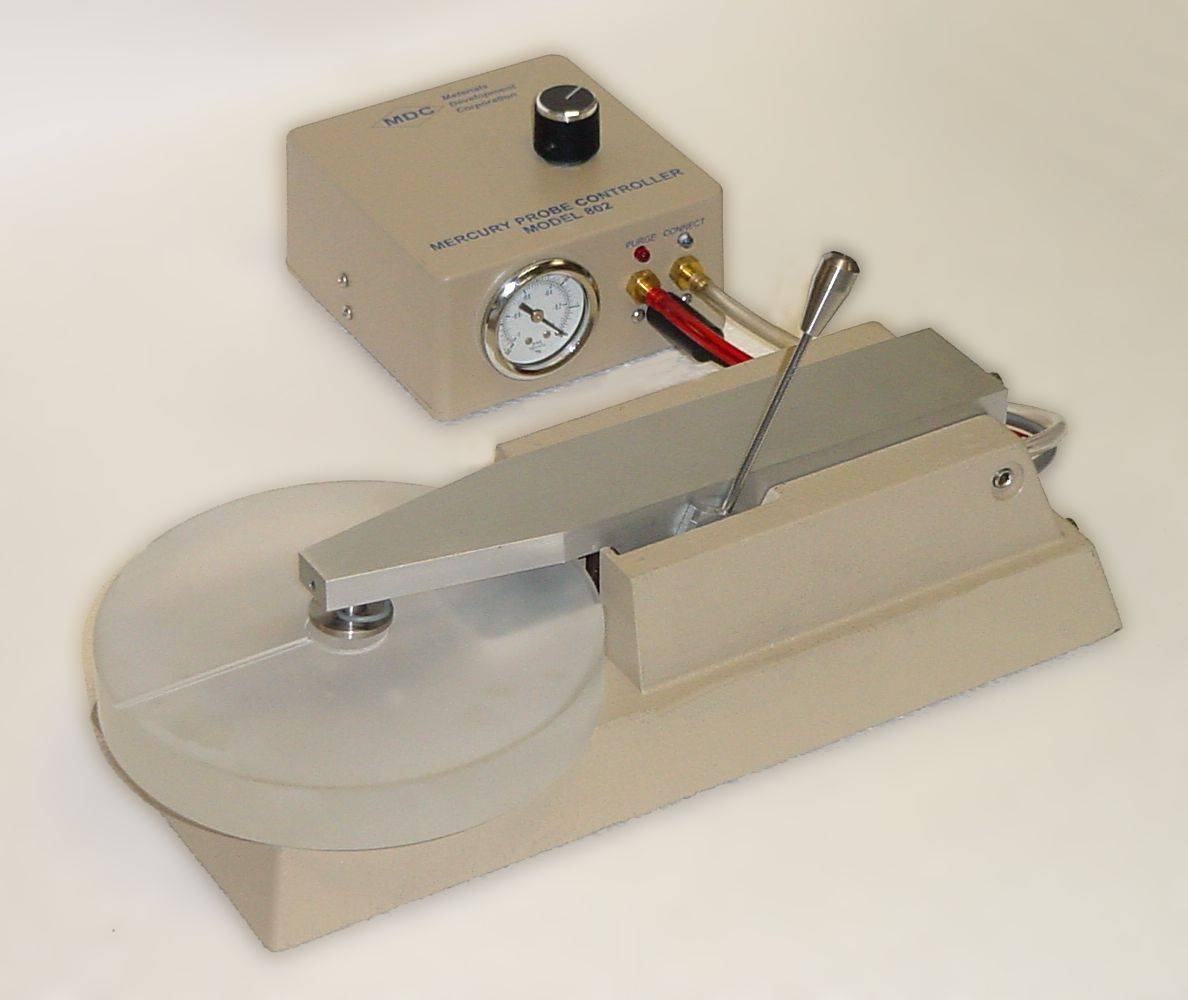
The Hermes Mercury Probe Station is designed for non-destructive electrical characterization of thin films without requiring a deposited top contact. It uses a liquid mercury probe, applied via vacuum, to form a temporary electrical contact on the sample surface while the backside serves as the second contact. This configuration enables accurate measurement of inductance (L), capacitance (C), and resistance (R) in thin film materials. The system includes a precision LCR meter and optional external bias fixture, allowing measurements on both mercury-contacted samples and conventional devices with leads. This flexibility makes it ideal for evaluating dielectric properties, semiconductor films, and other electronic materials.
Capabilities
- Mercury probe contact method – Enables top contact without permanent metallization
- Non-destructive testing – Preserves sample integrity during electrical measurements
- Thin film LCR characterization – Measures inductance, capacitance, and resistance
- Minimum probe spot size (775 µm) – Allows localized electrical measurements
- Mercury ring contact (1 cm diameter) – Supports larger-area surface measurements
- GW Instek LCR-8110G Precision LCR Meter – Performs high-accuracy impedance measurements
- Wide frequency range (20 Hz – 10 MHz) – Supports analysis across low to high frequencies
- Keithley 230 voltage source – Provides DC bias up to 100 V and 100 mA
- External bias voltage fixture – Enables testing of devices without mercury exposure
- Sample size compatibility (mercury probe) – Supports samples from 0.5” to 6.0” diameter and up to 0.5” thick
- External fixture sample capacity – Accommodates samples up to 2 × 3 × 4.75 inches
- Flexible measurement configurations – Allows both contactless-style probing and traditional lead-based testing
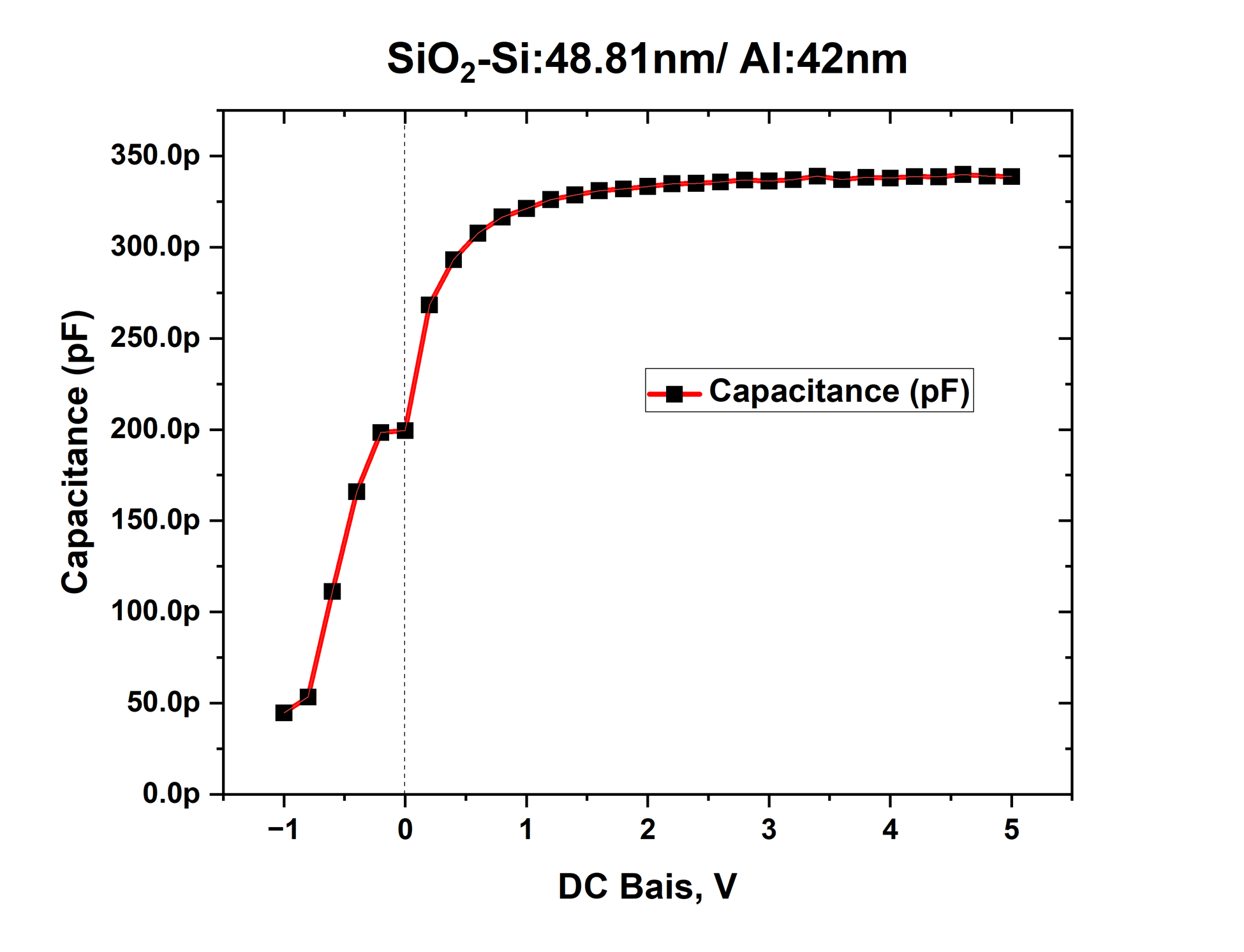
Example Data
Location: RFM 2226
Model: 802-150 MDC Mercury Probe