


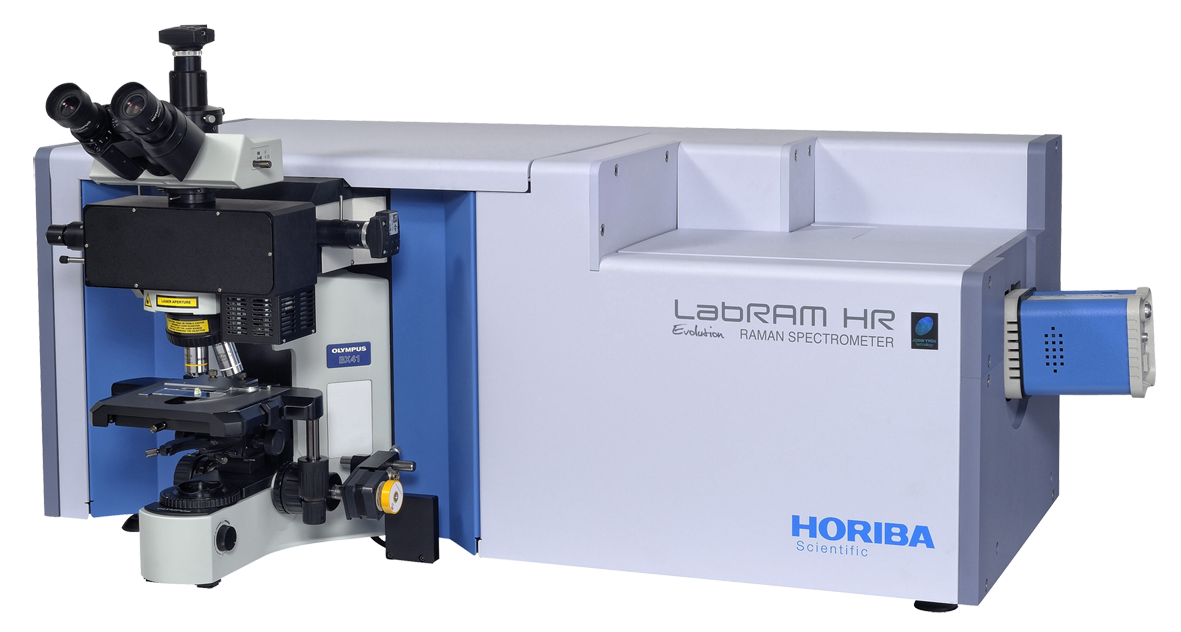
Description
Raman-AFM-TERS. HORIBA's leading Raman technology is now integrated with AIST-NT’s scanning probe microscopy (SPM). The NanoRamanTM platform integrates Atomic Force Microscopy (AFM) that can provide physical sample information on the nanometer scale, including topography, hardness, adhesion, friction, surface potential, electrical and piezo response (among many others), Scanning Tunneling Microscopy (STM), tuning fork techniques (Shear-force and Normal-force imaging modes), electrochemistry, all together with the chemical information obtained from Raman spectroscopy. The end result is a more comprehensive sample characterization in one versatile instrument, for fast simultaneous co-localized measurements and Tip-Enhanced Raman Spectroscopy (TERS).
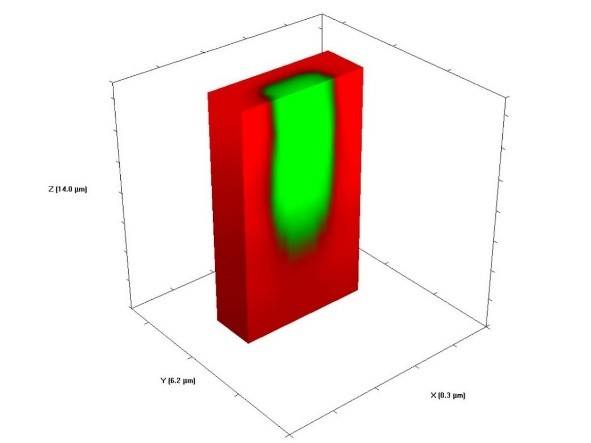
Horiba LabRam HR. Raman spectroscopy is a powerful technique to study chemical composition thru analysis of the vibrational, rotational, and other low-frequency modes in a system. LabRAM HR offers advanced confocal imaging capabilities in 2D and 3D.
AIST-NT SmartSPM design provides open access to the sample enabling using the upright optics with 100x objective (NA = 0.7) and side optics with 20x objective (NA = 0.42).
Capabilities
- Horiba LabRam HR:
- Three excitation lasers (532nm, 633nm, 785nm)
- High spectral resolution (<0.5 cm-1)
- Motorized XYZ stage for optical mapping
- AIST-NT SmartSPM:
- Fully automated 1300nm IR laser to photodiode alignment
- 100um scanning range
- Sample size up to 25mm
- Electrical, electrochemical and piezoforce modes
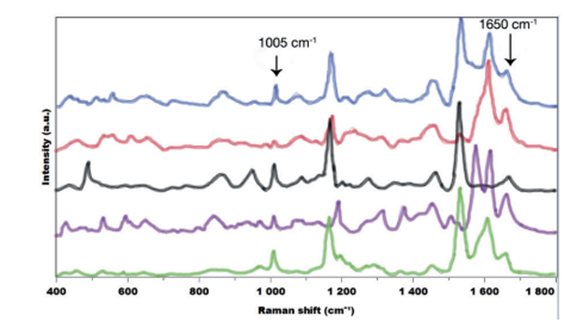
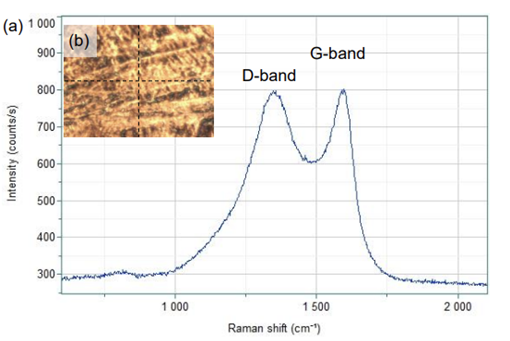
Example Data
Source: Horiba
Location: RFM 1203
Raman Model: Horiba LabRAM HR Evolution
AFM Model: AIST-NT SmartSPM
Generously funded by NSF MRI DMR-1625778 Texas State University